
Run a Taliaferro County Property Search in Sequence
Taliaferro County splits its records across several offices. QPublic carries the assessment side, GSCCCA indexes recorded instruments, and the Tax Commissioner issues the tax bill. When a deed or plat never made it online, the clerk or the state archives still holds the paper, so save every book, page, parcel number, and name as you go.
- Enter through the QPublic acceptance page and inspect which address, owner, or parcel controls load.
- Copy the parcel identifier and roll name exactly, preserving spaces and leading zeroes.
- Search that name in GSCCCA and reconcile the newest deed through its legal description.
- Use a subdivision or plat citation when the street address fails.
- Check the Tax Commissioner for the separate bill trail, then request missing existing files from the custodian.
The sequence matters because it separates a convenient starting record from the instrument that actually documents a transfer. It also keeps a mailing address from being mistaken for the land itself or for the occupant.
Choose the Strongest Taliaferro Search Key
| Starting key | Best use | Local limitation |
|---|---|---|
| Street address | Finding a contemporary parcel | Rural spelling, mailing city, and city limits may differ |
| Owner name | Finding several parcels or a deed party | Initials, trusts, estates, and entities create variants |
| Parcel/APN | Matching a tax-map identity | No countywide format legend was published |
| Subdivision | Using GSCCCA's basic property form | It is not a verified street-address search |
A Crawfordville notice supplies one verified parcel example, C05 051. That single example cannot define the county's full format. Strip punctuation cautiously, try formal entity names, and shorten date ranges if the first attempt misses.
- Parcel or APN
- The tax-map identifier that connects land records.
- Situs
- The physical parcel location, distinct from a mailing destination.
- Owner of record
- The name in a particular official record at its stated update point.
QPublic's Acceptance Screen Is Only the Gate
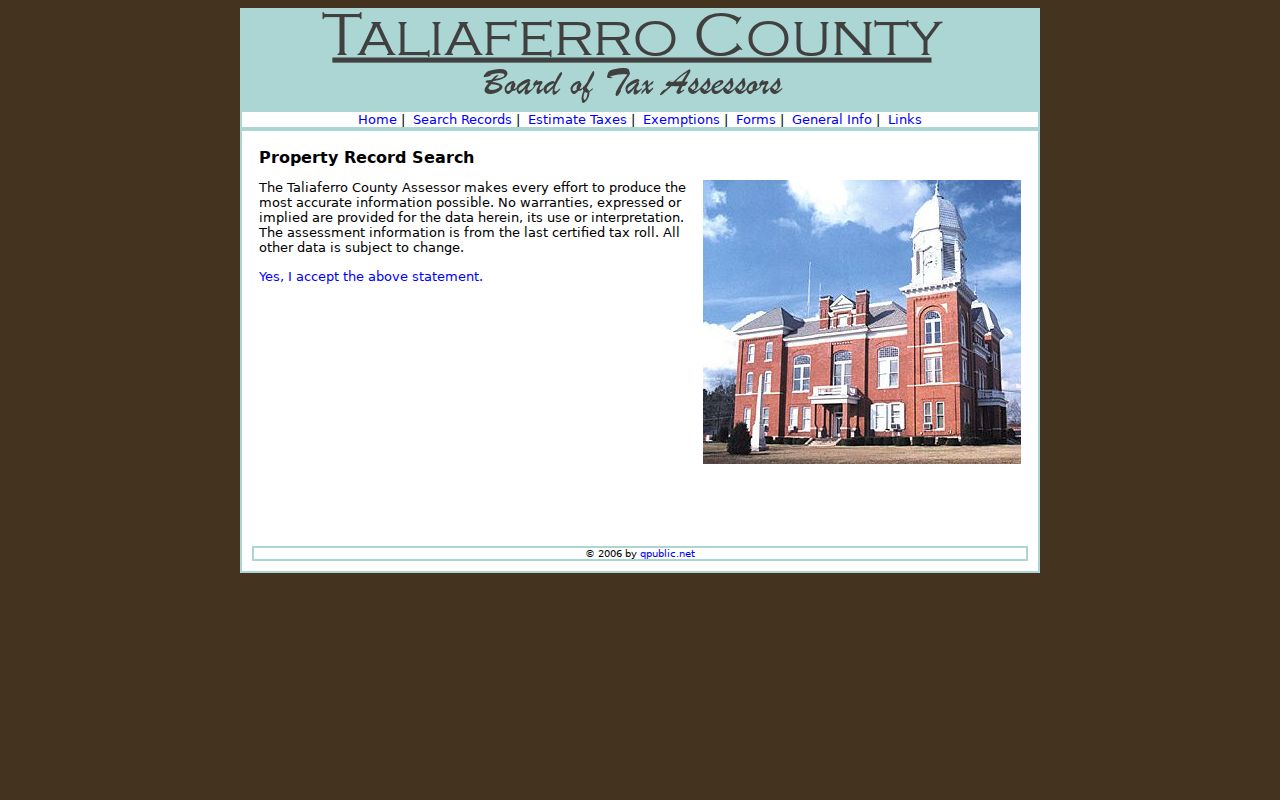
The accessible assessor shell confirms the office and displays an acceptance screen. That screen states assessment data comes from the last certified roll and other information may change. The linked Schneider application is often Cloudflare-blocked, so owner, address, parcel, result-card, and map controls may not load.
| Item | Verified | Still unknown |
|---|---|---|
| Acceptance statement | Required handoff is visible | None |
| Owner mode | Intended QPublic capability | Label and matching rules |
| Address and parcel modes | Not rendered | Availability and formatting |
| Result card and map | Not rendered | Field names, layers, refresh details |
If the application fails, call the assessor's office at 706-456-2717 or visit during the published Tuesday and Thursday hours, 9:00 AM to 5:00 PM. Staff can explain what the appraiser review flagged. Field appraisers give notice before a visit, use marked vehicles, and carry identification, so a knock at the door should never come as a surprise.
Note: A newly recorded deed may postdate the last certified tax roll.
Search GSCCCA Names with Local Precision
The GSCCCA name search asks for entries in “last name, first name” order. Filters can cut common-name noise and separate deeds from security deeds, releases, liens, and other instruments.
| Field | Control | Use |
|---|---|---|
| Party Type | Optional dropdown | Live options were not captured |
| Instrument Type | Optional dropdown | Narrow by document only after checking options |
| County | Optional dropdown | Select Taliaferro |
| Neighboring counties | Checkbox | Widen a boundary-tract search |
| Search Name | Text | Last name, first name for individuals |
| From / Through | Date pair | Use mm/dd/yyyy |
Search an LLC under its exact registered name. For an estate, try “Estate of,” executor, administrator, and heir variants. A lender or trustee may appear in a security deed without ever being the fee owner.
GSCCCA Subdivision Search Is Not Address Search
The basic property form exposes county, a required subdivision field, optional dates, and display controls. Separate PT-61 and premium address tools sit in the search hub. Their Taliaferro availability varies.
Use subdivision mode when a deed or plat supplies a formal name. For rural acreage, an owner, surveyor, adjoining owner, road, district, acreage, or book/page can be stronger. A Highway 22 notice rests on a 1973 John A. McGill survey, Plat Book 6 Page 140, and adjoining tracts rather than any subdivision name.
The captured QPublic entry screen shows the actual gateway encountered before the interactive application.
The GSCCCA property form displays its subdivision-centered controls plainly. Document what loads in your own session, note the certified-roll caveat, and save a source date before carrying any owner or parcel clue into another system.
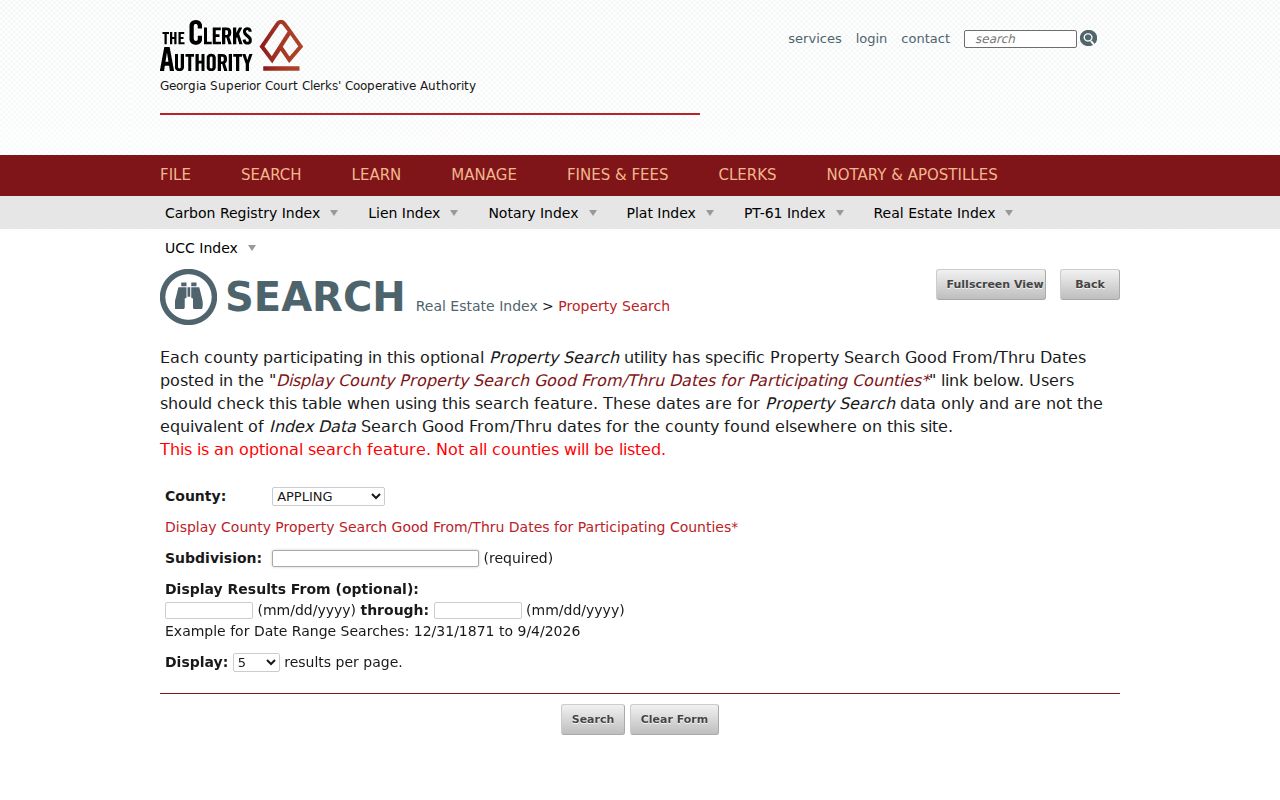
The required subdivision box makes this a different tool from a general address lookup. Search a plat name exactly. Then compare lot, block, date, party, and recording references in the returned index.
What Taliaferro Property Search Results Connect
Taliaferro publishes no live local parcel card, so expected assessment fields cannot be treated as observed facts. When a result loads, preserve its displayed labels, values, disclaimer, and roll date. The official deed-index schema is the better-verified structure.
| Tax-roll identity | Displayed owner label, mailing destination, situs, parcel key, and roll date, if present |
|---|---|
| Assessment detail | Values, exemptions, legal description, or sketch only when actually displayed |
| Deed index | Parties, roles, location, instrument, date, book/page, and image status |
| Plat trail | Subdivision, block, lot, surveyor, cabinet or plat-book citation |
| Tax trail | Bill, payment, balance, delinquency, or FiFa |
| Follow-up | Prior deed, court file, probate file, certified copy, or older deed book |
Never assume a missing online field means the record does not exist. Ask the office for the record class and date you need.
A Plat Can Rescue a Failed Address Query
A local notice links 253 Williams Street to APN C05 051, Lot 1 of the Emile Williams property subdivision, a 1944 J.W. Turner survey, prior deed Book 99 Page 219, and a plat moved from Record 2 Page 37 to Cabinet A Slide 12. It is a compact lesson in keeping every key.
When an address fails, search current and former owners. Request the cited plat. Compare legal descriptions. Older rural land may be described through acreage, district, watercourse, surveyor, and adjoining owners. Those clues can reconnect a modern tract to older books, though the notice itself does not prove current title.
Use Every Taliaferro Access Channel
Call the clerk at 706-456-2123 for instruments and older books. The assessor at 706-456-2717 handles the roll. The Tax Commissioner at 706-456-2520 handles billing. All three work from 113 Monument Street, but their schedules differ, so confirm before travel. GSCCCA lists $5 single-use access for four hours, $29.95 monthly premium access, and 50 cents per printed page. Those are platform prices, not local certification charges.
Need permit, zoning, addressing, or data files without a portal? Make a focused Georgia Open Records Act request. Specify address or APN, record class, names, dates, and format. Older research can continue through clerk books, the Taliaferro County Library, Georgia Archives, and newspaper archives. The custodian need not create a custom report.
Compare Taliaferro Search Keys Before Relying
Address is convenient. Owner is strong for holdings and deed parties. Parcel number is the cleanest bridge to the tax map. Reconcile at least two keys, preferably legal description or parcel plus party and recording reference.
| Search Key | Best For | Where It Works | Watch Out |
|---|---|---|---|
| Address | Contemporary parcel | QPublic if the control loads | Rural routes and mailing city |
| Owner name | Roll or deed parties | QPublic and GSCCCA | Initials, estates, entities |
| Parcel number | Cross-system match | Tax and parcel records | Spaces, zeroes, unpublished schema |
Not a title search. A Taliaferro County property search supplies recorded and assessed leads. Confirm the newest relevant instrument and use a qualified title professional when legal reliance matters.
Separate Situs, Mailing, Value, and Sale Data
Does a result name the current owner? Only the name on that record. Weigh the roll's effective date against the newest deed. No fixed Taliaferro update lag is published.
Addresses tell different stories. A mailing address on the tax roll is where notices go, not proof anyone lives there. A situs address shows where the land sits, yet a rural tract's legal identity often rests on its legal description instead. Lot and block, subdivision, acreage, district, survey, and plat references are what tie one deed to the next in Taliaferro County property records. Deed consideration is its own animal too. It is not the assessor's market value, not Georgia's 40-percent assessed value, and not the tax balance. Log every fact beside its source and effective date. That habit keeps a property records search from blending unlike data and makes any conflict easy to explain.
Search Names Beyond a Simple Individual
Not every owner of record is a person. Ownership in Taliaferro County can sit with an estate, a trust, an LLC, a bank, a trustee, or a successor. GSCCAA-style searching rewards patience: start with exact spelling, then loosen it. Try dropped punctuation, initials, former names, and role terms. The Georgia Secretary of State Business Search adds business name, control number, registered agent, officer, and designated agent fields. It normalizes an entity name nicely. Still, it is not a parcel ownership record.
Estate transfers can break a tidy chain of deeds. Search the decedent, "Estate of," the executor, the administrator, and heirs, then request probate files. A security deed may name a lender or trustee who never held fee title. When the same name repeats, separate the matches by initials, dates, location, acreage, book/page, and prior instruments.
Build a Source Log for Every Taliaferro Match
Every Taliaferro match deserves a log line. Note the portal or office, the access date, the effective roll or index date, the exact query, filters, and identifiers returned. Save party spelling and role, document type, execution and recording dates, book/page, image status, legal description, parcel key, and any cited plat. Source and effective dates matter most. They keep a later tax roll from being mistaken for an earlier deed.
Then add a follow-up column. One deed may point to a prior instrument, a plat cabinet, an estate, or a court case. A tax result may require the Tax Commissioner. A rural description can lead through a surveyor, an adjoining owner, a road, a district, or a watercourse. Label each lead verified, unresolved, or contradicted. Before any purchase, estate, boundary, or easement decision, pull the underlying record and get appropriate professional review.
Continue a Taliaferro Search into Court and Probate Files
A deed-index match is often just the first door. Foreclosure, lis pendens, quiet title, and partition cases may live with the courts instead. Lien enforcement and probate-related real-estate filings may end up there too. Georgia Courts eAccess offers a statewide account and provider route. Its exact Taliaferro fields are not exposed. No local sample docket appears there. Treat it as one possible channel. Then contact the Superior Court clerk for the existing file.
Make the ask specific. Give a party name, case type, approximate dates, property description, and any known case number. Restricted material stays restricted even when a related deed is public. A certified death record carries its own eligibility and access rules for estate transfers. The probate record and an executor or administrator deed serve different steps. Each marks its own point in the land trail.
Court orders, tax sales, and estate proceedings can all point back to one place. That place is the instrument finally recorded against the property. Record the filing date and the recording date separately. When a deadline or an in-person visit matters, confirm current courthouse operations first. A January 2026 judicial emergency closed Lincoln and Taliaferro courts for Winter Storm Fern. It shifted deadlines as well. That episode is a concrete reminder. Posted routine hours never guarantee access on a given day.